


Once upon a time, before Pixar gave us a well-meaning and reasonably adorable green character named Shrek (who, notably, still lands a princess), the word ogre conjured something far less charming. If you look it up, an ogre is described as a legendary monster with a disproportionately large head, unusually colored skin, and an imposing physical presence. It’s often violent, grotesque, and known, among other things, for eating humans. I was never particularly drawn to fantasy stories with creatures like this, which is why it surprised me when the image appeared so clearly in a recent session with my coach.
She prompted me to personify a particular brand of limiting beliefs that continue to beleaguer me in my business and personal life, and “ogre” fell out of my mouth without hesitation. Perhaps my subconscious recognized the ugly, obstructive nature of the inner critic I’ve allowed to take up residence in my mind for longer than I care to admit. In that session, the ogre revealed a familiar refrain:
It has to be hard, so I can prove I deserve it.
At some point in my life, I decided I am not inherently worthy. That worth must be earned through effort, strain, and persistence. I learned that success must be preceded by suffering, and that ease is something you arrive at only after you’ve paid your dues. I can’t yet trace the exact moment this belief took root. Perhaps it was watching how hard my parents worked. Or maybe it formed as I moved through an education system that felt demanding, where I quietly concluded that I never quite measured up to the other kids. Regardless of it’s origin, I can see how faithfully I’ve lived by this belief.
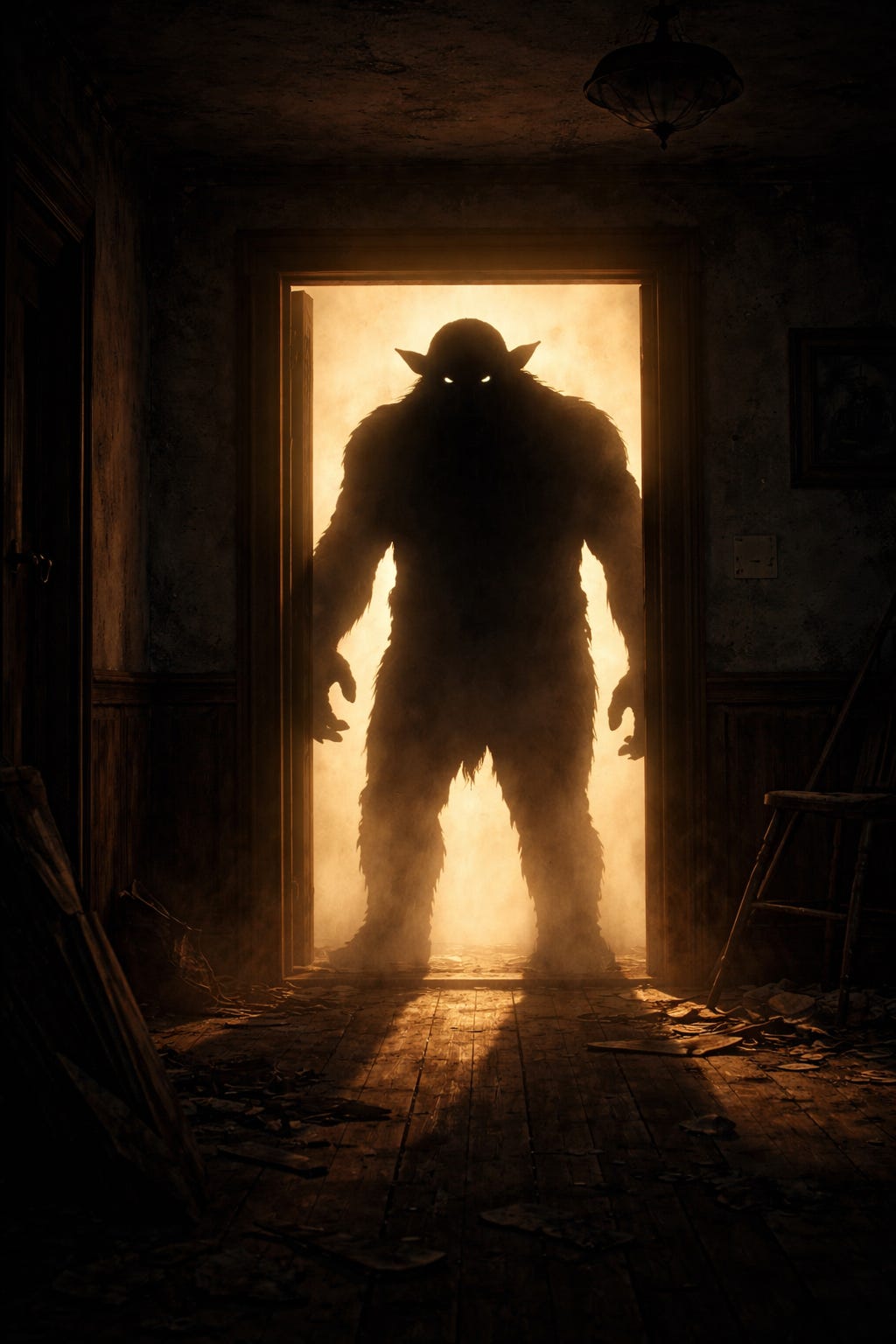
In my mind’s eye, this ogre is blocking a doorway leading to another room. I can see a party happening inside. I can hear music and laughter. There’s movement, lightness, and ease. But I can’t quite make out who’s there or what they’re doing. I simply assume I’m not invited—or that I’ll need to slay this big, ugly beast to gain access.
The irony is that I am the one who conjured this ogre, and I am the one who keeps feeding him. And if I’m honest, I’ve also been the one hiding behind him. Even though I want to go to the party in the other room, there’s something strangely comfortable about where I am. In this room, I can blame the ogre if I don’t reach my goals because, well… it’s hard to beat an ogre. Everyone understands that. And if I do manage to take him down, how valiant and strong do I appear?!
The magic of that coaching session wasn’t in uncovering the belief—I already knew I was hard on myself. The magic was in seeing it clearly, in form. When the ogre appeared, I laughed. Not because it wasn’t a real pain point, but because of how absurd it suddenly felt. I don’t have to defeat him. I don’t even have to transform him with some kind of performative gratitude for his so-called protection. Just like I placed him there, I can let him step aside.
Nothing about me has to change. I don’t need to become more disciplined, more qualified, or more impressive to earn love or a thriving business. I don’t need to suffer my way into legitimacy. The party doesn’t require a password. It only requires that I stop insisting I don’t belong—and walk through the door unarmed.